Living Among Centenarians
A Short History of Those Who Surpassed the Milestone of 100

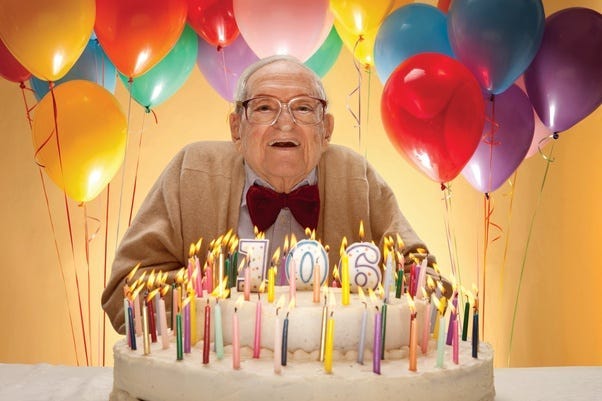
Biologically speaking, the human lifespan has more or less always been the same, with the average life expectancy of around eighty and an absolute maximum age of 120–125.
It is a myth of history that people naturally had short lives, even though in practice people were indeed often cut down, often before reaching their prime, let alone, their twilight.
Some of the reasons for this included:
Higher infant mortality rates due largely to limited modern healthcare and vaccines which could protect the younger, more vulnerable populations from diseases
Warfare was much more common, and often far deadlier than in today’s world, due to fightings being done at close-quarter with swords rather than rifles, as well as victorious armies being much less likely to respect the right to live of captured enemy prisoners of war and civilians alike
Condensed wooden villages made it more likely for an entire village, town, or city to be burnt to the ground, which would kill a large number of people outright, in addition to causing many more deaths due to survivors being forced to crowd together and subject one another to contagious illnesses, suffering from the ill effects of weather exposure, as well as starvation and dehydration
Working conditions were much harsher, especially for men who were expected to labour in quarries, farms, and manual labour, or any other type of physically back-breaking work that could take years off their life
Certain fruits and vegetables were less readily available for the average city folk, who often got by on unnatural commodities such as alcohol, bread, and other basic meals that were lacking in nutrients and vitamins that could ward off scurvy and other common disease killers of the pre-modern era
Natural disasters were much more lethal, since there was limited to no warning signs for hazards such as tornadoes, hurricanes, earthquakes, droughts, and volcanoes, and even less resources to accommodate survivors
Peacetime murder rates were much higher, with one estimate suggesting that over 15% of Paleolithic humans died by homicide, which only slightly lowered to 10% in Medieval times before dipping to well below 1% in modern times
Points Two and Four in particular especially applied to men, which is generally believed to be one of the main reasons why women have historically had longer lives, and why nearly all centenarians and supercentenarians have been women, with men only recently becoming more representative.
While birth records as we understand them today did not exist before the beginning of the twentieth century, the fact that there is no evidence that the billions of human beings who lived before us were born with a biological function that automatically made their lifespan shorter, and that there have been claims around the world since the beginning of recorded history of people living into the triple-digit ages suggests that at least some individuals did indeed live to become a centenarian or even supercentenarian.
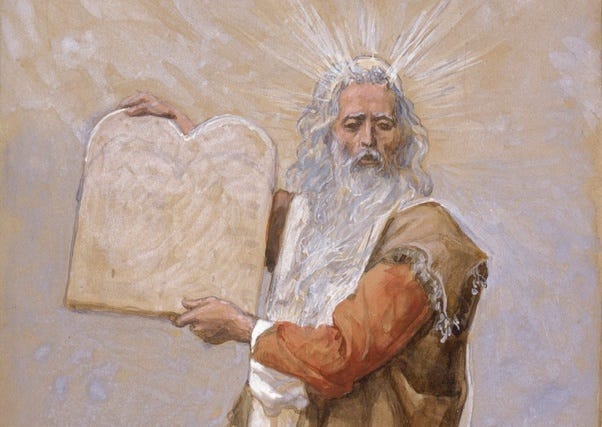
Who these people were is something that has been lost to history, with legends and stories of mythological and biblical characters alike often being named, though none of whom can be authentically verified with modern sources.
The Korean Emperor Jangsu (394–491) lived to the age of 97–98, making him the oldest ruler in the history of Eastern Asia whose age is not disputed by modern gerontologists and historians, though this comes just shy of reaching that crucial age of 100.
If a single monarch managed to come so close to becoming a centenarian nearly sixteen centuries ago, it is statistically likely that at least one of his or her subjects — or at least a subject of a predecessor or successor — would have broken that record sometime before the modern era, even if it was some lone peasant whose name is now forgotten to the chronological clock of history.
The Scandinavian Eilif Philipsen (1682–1785) is widely regarded as the earliest recognised centenarian, who lived to a few weeks before his 103rd birthday, though it appears that even his case is now coming under dispute by a few modern critics who believe that the family had two people born by that first name, with the older being born in 1682 and the younger dying in 1785 to make the lifespan appear longer, though this claim is not universally agreed upon.
Regardless, while 100 may sound impressive, as only 1 in 800 newborns born in 1900 even reached centenarian status, even more rare was the 1 in 1,000 centenarians who lived an additional ten years longer to become supercentenarians — a category that is unsurprisingly even more modern in terms of verification.
It is not until we get to the year 1788 that we find the first case of a verifiable supercentenarian by the name of Geert Adriaans Boomgaard — a Dutch native who was also possibly the last verified veteran to have served in the Napoleonic Grande Armee.
Boomgaard would go on to beat the records of previously known centenarians, including the Belgian Pierre Darcourt (108) and the Norwegian Kirsti Skagen (109) before dying on February 3, 1899, at the age of 110 years and 135 days — the oldest human on record at the time.
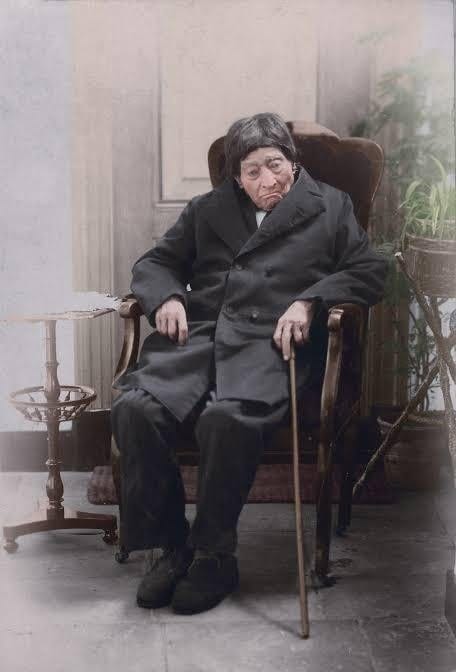
According to gerontologists, it is estimated that for every supercentenarian like Boomgaard, there are at least a thousand centenarians, meaning that if even one person born in the late eighteenth century managed to break the 110-year-plateau, we can be certain that there were many more contemporary Darcourts and Skagens out there whose tombstones have yet to be vindicated.
I remember not that many years ago when a woman by the name of Gertrude Weaver was herself kept as an unverified supercentenarian, due to having one relevant birth record, but not having a second, such as a baptismal certificate, which kept her status in limbo until a second piece of identification was discovered in her final years to make her briefly the oldest living person before her passing in 2016.
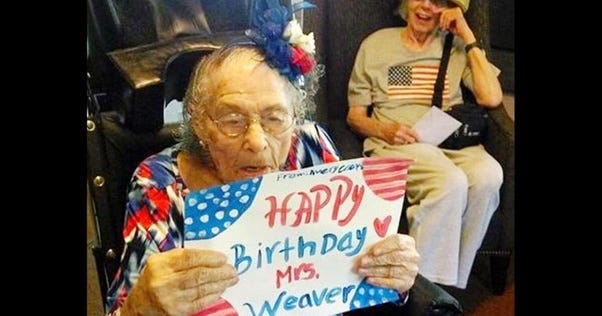
If in today’s age even having one proof of birth paper is not sufficient to be recognised as a centenarian or supercentenarian, we can only imagine the obstacles that individuals living in the pre-digital ages would have needed to overcome, especially in societies where such records did not have the same value that they have in the twenty-first century.
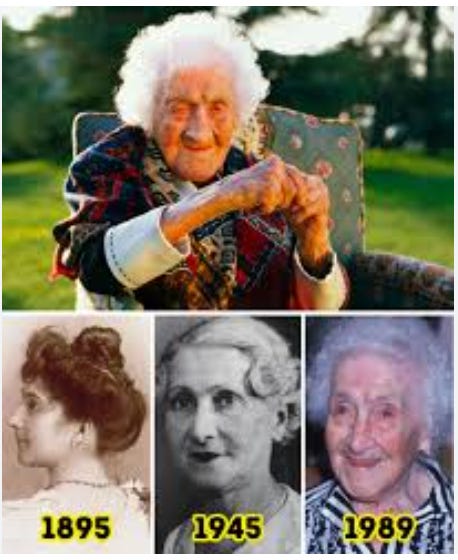
Other cases, such as those involving Jeanne Calment — whose whopping verified age of 122 years puts her in a class above supercentenarian status — are so rare even for our times that it would be reasonable to assume that there is a good chance that nobody else in history besides herself has surpassed this milestone.
But that does not mean that the possibility was not there, given the right family tree, upbringing, nutrition, lifestyle, and some DNA luck to go with everything else.